

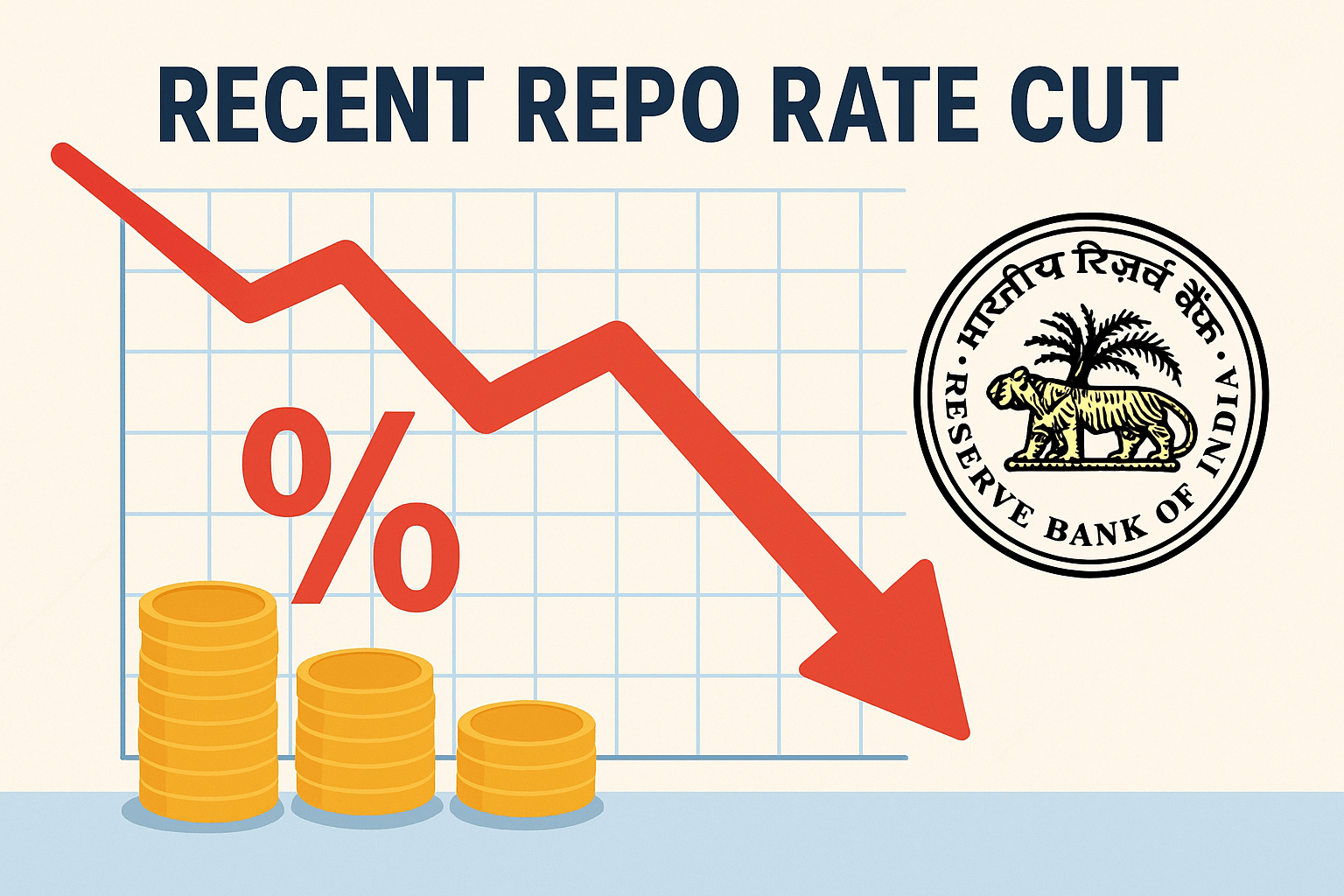
Repo Rate Cut: In a firm and clear action to help the economy grow, the Reserve Bank of India (RBI) has today announced the reduction of the key lending rate by 25 basis points. As a result, the RBI repo rate is now 5.25%. The Monetary Policy Committee (MPC) also, in its vote, expressed a similar opinion in the sense that a cut of 25 bps in the key rate was in order. So it was a unanimous decision, indeed. The measure will have a great impact on borrowers, as it will make their borrowing conditions much lighter.
Repo Rate Breaking News: Rate Cut Delivered
The change in the RBI repo rate is the fourth time this year that the central bank of the country has cut the rate. This indeed is a move by the bank to stay the course by stimulating the economy. Components of today’s policy: The repo rate is now at 5.25%, while the Standing Deposit Facility (SDF) is at 5.00%, and the Marginal Standing Facility (MSF) is at 5.50%. The MPC so far does not opt for a certain policy direction but rather remains ‘neutral’, i.e. it is willing to change the policy as the economic situation varies.
RBI Cuts Repo Rate: Growth and Inflation Outlook
By and large, the MPC’s choice to pursue a rate reduction was underpinned by the assessment of a healthy economic upturn together with a stable inflation outlook. Sanjay Malhotra, the Governor of the Reserve Bank of India, underlined that the “growth-inflation balance…is still offering policy space to keep the growth momentum going.”
The GDP growth of India showed a lot of potential in the last quarter; thus, the MPC’s full-year GDP forecast was raised from 6.8% to 7.3%. At the same time, according to the data, retail inflation has reached its lowest point in the last 25 years and is estimated to be around 0.25%. Due to this, the MPC adopts an extremely low inflation target for the fiscal year, i.e. just 2.0%. The co-occurrence of the two phenomena, that is, high growth combined with low inflation, was, in fact, the main reason for the rate cut RBI has delivered.
Repo Rate Latest Update: Relief for Borrowers
The first group of people who will be able to feel the practical effects of the repo rate change in 2025 are the millions of consumers out there. This is because, given that most retail loans, and in particular home loans, are nowadays tied to external benchmarking (EBLR) such as the repo rate, this one-quarter-point reduction will be basically a decline in Equated Monthly Instalments (EMIs).
Let me walk you through an example to make things clearer. Suppose a borrower has a ₹50 lakh home loan over 20 years, then lowering the rate would mean a significant total interest saving on the loan over the years. In such a way, cutting back on the cost of borrowing will have a positive effect on the demand for interest-sensitive sectors such as real estate and automobiles; thus, the growth forecast would be well on its way to realisation.
Repo Rate Cut by RBI: Impact on Savings
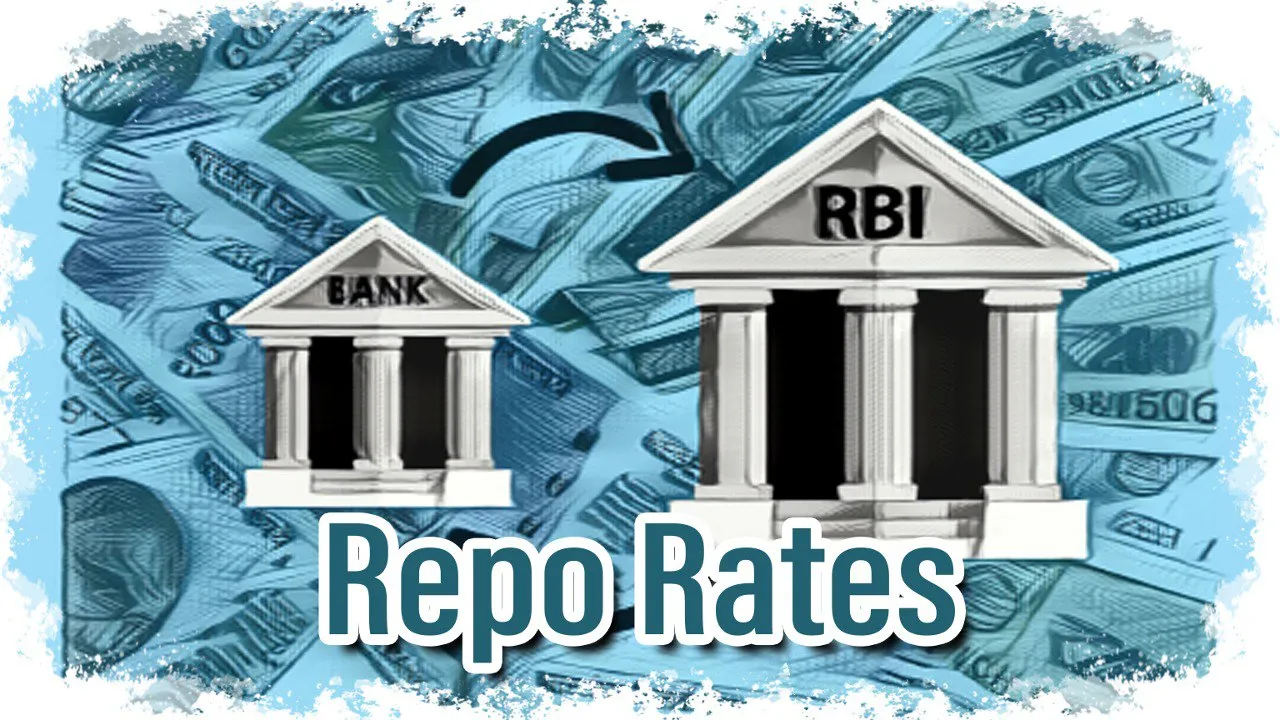
While the borrowers are having a good laugh, let me remind you about the savers. Among them, those who depend heavily on Fixed Deposits (FDs) will certainly feel the pinch. What usually happens when a cut in lending rates is made is that banks tend indeed to reduce the interest rates to be paid on FDs. So, what kind of investors are we talking about here? They are the “lock-in” players who need to secure the current high rates before banks are fully done with transmitting the repo rate cut by the RBI across their deposit products.
The breaking news about the repo rate is a confirmation of the RBI’s IP to maintain focus on credit expansion and, therefore, being the main driver behind India’s strong economic momentum.
FAQs
What is this repo rate?
The Repo Rate is the interest rate at which the RBI lends money to the commercial banks when they are in need of short-term funds. If the repo rate increases, loans like personal, car or home loans become more expensive.
What is the repo rate of RBI in 2025?
As per the announcement made by the RBI, the current Repo Rate is 5.50%. The Reserve Repo Rate is 3.35%.
What are the current repo and reverse repo?
The current repo rate is 5.50% and the reverse repo rate is 3.35%.
What is M1, M2, M3, M4 by RBI?
M1, M2, M3, and M4 are different measures of the money supply in an economy, defined by the RBI, with M1 and M2 being “narrow money” and M3 and M4 being “Broad Money”.
- M1: the most liquid forms of money in the economy.
- M2: includes M1 plus less liquid forms of money.
- M3: It includes both liquid and less liquid forms of money.
- M4: the broadest measure of money supply.
What is the current CRR rate?
As of December 2025, the RBI Cash Reserve Ratio (CRR) stands at 3.00%, following a phased reduction from 4.00% that concludes in late 2025.