
Daylight Savings 2026: Key Dates and Latest Time Change Update
Daylight savings time 2026 begins today in most parts of the United States because the clock change has regained public attention.

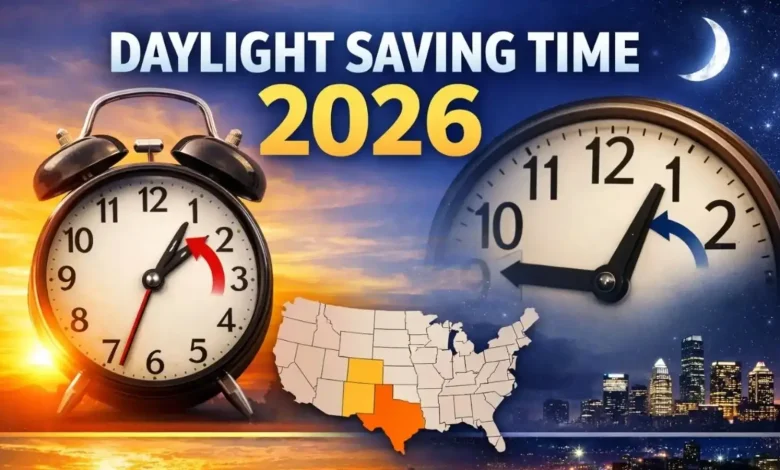
Daylight savings time 2026 begins today in most parts of the United States because the clock change has regained public attention. People in the United States change the time every year in order to make the most out of the daylight during the summer season. It is a good idea for the country to continue this tradition because people are now discussing its implementation as a standard practice.
The daylight savings 2026 latest news shows two developments through its coverage of upcoming time changes and current policy talks, which Washington officials hold about stopping the practice of changing clocks twice each year. The tradition stays in place at present because it disrupts sleep patterns and daily activities and business operations throughout the United States. This post presents the daylight savings 2026 latest update together with important dates, while explaining the reasons for current time adjustments.
Daylight Savings 2026 Start Date and Key Timing
The most important information for Americans is about the daylight savings 2026 start date. The change in daylight savings will officially happen on Sunday, March 8, 2026. The change in time will be by one hour at 2:00 a.m. in the morning and will be set to 3:00 a.m. The change in time is referred to as “spring forward.”
Some individuals will be losing a total of one hour of sleep but will be rewarded with more evening daylight. The change in time works on this principle. The change in time occurs by gaining one hour on the night of the 7th of March when we change from March 7th to March 8th. The change in time affects all states in America and over 300 million individuals.
The schedule for daylight savings 2026 for the USA works on a federal law that has been in place since the establishment of this regulation. The change in time has started on the second Sunday in March and ends on the first Sunday in November since 2007.
The change in time occurs automatically on all phones but requires a change in all manual time-keeping devices such as wall clocks and microwaves.
Why the United States Still Uses Daylight Saving Time?
The latest news about the time for daylight savings 2026 shows that people still argue about why daylight saving time exists. The concept originated to help people use daylight more effectively while reducing their energy consumption. The system achieved widespread adoption during World War I, and the United States officially established it through the Uniform Time Act of 1966. The system’s main objective required people to use natural light, which resulted from shifting daylight into the evening period.
People still discuss the advantages of the practice, which started in 1918. Daylight saving time creates greater opportunities for people to spend time outside, according to advocates of the practice, who also believe it increases store sales and decreases evening power consumption.
People who oppose the practice, however, claim that it creates sleeping problems while delivering only minor energy savings. Multiple health research studies show that missing one hour of sleep will cause people to lose their ability to work and focus for a limited time.
The existing system for daylight savings 2026 USA will remain in effect until Congress creates new laws to change it.
When does Daylight Saving Time 2026 end?
Another important date to keep in mind is when daylight saving time 2026 ends. Daylight saving time will be reversed on Sunday, November 1, 2026, which is what most people call “falling back”.
Changing clocks back at night gives everyone an extra hour to sleep and creates shorter days during the winter months.
The current daylight savings 2026 period will last approximately 238 days, meaning longer days in the evenings is one of the main objectives that come with changing the clocks.
This system runs in most of the United States, with exceptions for parts of the country where you cannot use this system due to the choice of the area itself, such as Hawaii or most of Arizona, as well as several American territories that do not observe time changes.
Policy Debate Around Daylight Saving Time
The update for daylight savings 2026 time will stir conversation between lawmakers, as time changes can impact normal time transitions. Several times over the last three or four years, the legislature has been considering permanent daylight savings time legislation which requires time to be kept at one standard throughout the year and to be eliminated at the end of the semi-annual changes.
The United States Senate passed The Sunshine Protection Act on March 15, 2022, which sought to establish year-round daylight savings time as an established and enacted law; however, it has not yet been signed into law. Thus, the American population will be required to observe the current time for daylight savings 2026 schedule based on the way it has historically been done since the legislative process is currently stuck. Until there is some form of agreement reached in Congress, the current practice of springing forward to daylight savings time and falling back to standard time will continue.
What does the Time Change Means for Daily Life?
The implementation of daylight saving time for daylight savings 2026 causes more than clock changes. The time switch creates effects on sleep patterns and commuting schedules and work routines for most individuals. The combination of shorter morning hours and longer evening daylight creates new ways for people to schedule their daily activities. The additional daylight provides restaurants and recreational facilities with their operational peak time for their evening business activities.
Sleep experts suggest people should start adjusting their bedtime schedule three days before the daylight savings 2026 beginning. The body can better handle time changes when people make even minor time adjustments. The time change represents an essential aspect of the American calendar that people either love or hate.
Conclusion
The United States will go through its usual process of adjusting the clocks because the process of daylight savings time begins on March 8, 2026. While the system is still being debated, it is still in place. The coming months will see the United States enjoying long days because the process of daylight savings 2026 begins on March 8 and ends on November 1. The latest update on daylight savings 2026 has made one thing very clear: the process is in place, despite the debate surrounding it.
FAQ
Is the United States getting rid of daylight savings time?
The United States has not yet approved legislation to eliminate daylight saving time despite ongoing discussions in Congress. The existing system will remain in effect until further notice.
When was daylight savings 2026 time?
On March 8, 2026, the daylight saving time starts with the time being set ahead by one hour.
Why do we turn off daylight savings?
Every year, daylight saving time ends in a bid to return the country to standard time. This normally happens during winter times, a period when mornings need more hours of daylight.
What is daylight saving time in 2026?
In March, when the clocks skip forward and go back to establish daylight or in November when they are taken back so that the early darkness ensures an evening of daylight till night, it is the time adjustment for a year.
What’s happening in 2026 in the USA?
The traditional US daylight saving pattern, which would begin on March 8 and end on November 1, is set to continue until recent changes by policymakers have questioned the system.